Platformers That Redefined Movement and Mechanics
26 May 2026
Platformers have always held a special place in the gaming world. They’re the bread and butter of many players' early gaming memories. From pixelated jumps to gravity-defying parkour, platformers have constantly pushed the boundaries of how we move and interact within digital spaces.
But let’s be real – not all platformers are created equal.
Some took the genre, gave it a spin, and added new layers of creativity that changed the way we think about game mechanics. So, let's shine a spotlight on some legendary titles that didn't just stick to the script but rewrote it completely.
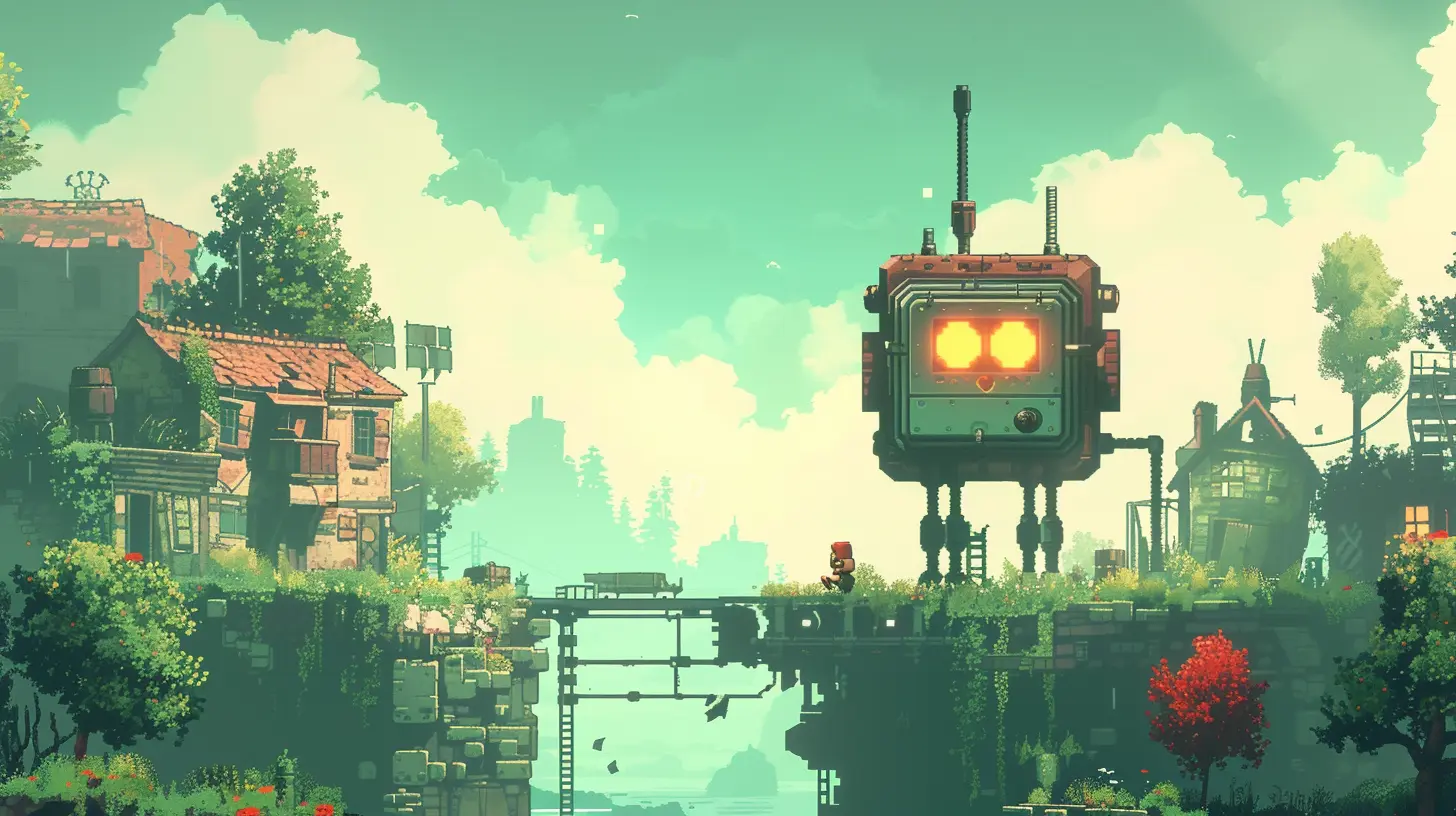
What Makes a Platformer Stand Out?
Before we jump into our list, let’s talk about what makes a platformer special. It’s not just about jumping from point A to point B. It’s about control, timing, creativity, and, most importantly, how movement feels.Think of it like learning to ride a bike. At first, it’s all about balance and control. But once you nail it? You’re popping wheelies and zooming through the neighborhood. That’s the kind of edge these games brought to the platforming scene – freedom and finesse.
Now, let’s get into the games that changed the game.
Super Mario 64 (1996) – The Blueprint For 3D Platforming
Ah yes, the classic that needs no introduction – but we’re giving it one anyway.When Super Mario 64 dropped on the Nintendo 64, it didn’t just step into the 3D world – it leaped in with a triple flip and nailed the landing. Until then, platformers were mostly side-scrolling affairs. But Mario 64 flipped the genre on its head by giving us full 3D movement with a camera that (mostly) kept up.
Why It Was Game-Changing:
- Introduced analog control and fluid movement- Gave players a sense of exploration rather than linear progression
- Set the standard for 3D level design and camera control
The game didn’t just give us freedom – it made us want to master movement. From long jumps to wall kicks, Mario’s toolkit inspired generations of developers looking to match that magic.
Celeste (2018) – Precision, Purpose, and Emotional Punch
Celeste came in swinging with pixel-perfect platforming and a heartwarming narrative that hit you right in the feels. But it wasn’t just the story that stood out – it was how the movement mechanics felt so deeply integrated with the player’s emotional journey.What Made It Revolutionary:
- Ultra-tight controls that made failure part of the fun- Dash mechanic that redefined tempo in movement
- Levels designed to teach through play without hand-holding
Every death in Celeste taught you something. And with unlimited lives and fast respawns, the game encouraged experimentation. It was like a tough-but-fair coach cheering you on from the sidelines.
Mirror’s Edge (2008) – First-Person Parkour Madness
Who said platformers had to be side-scrollers?Mirror's Edge brought platforming into a first-person perspective and made movement the star of the show. Running, wall-running, sliding, jumping – it felt like gymnastics on rooftops. The visuals were minimalist, but the adrenaline rush was real.
Mechanics That Turned Heads:
- Emphasized flow and momentum like no other- First-person traversal that actually felt good
- Risk vs reward system through non-violent gameplay
The game showed us that platforming wasn’t limited to a third-person view. You could experience the thrill of movement first-hand – literally.
Hollow Knight (2017) – Metroidvania Meets Refined Movement
Don't let its quiet beauty fool you – Hollow Knight is a beast of a game.While it's more of a Metroidvania at its core, the precision and fluidity of its movement system elevated it to a whole new level. Dashing, wall-jumping, pogoing off enemies – every move you unlocked expanded your abilities in subtle, wonderful ways.
Movement Miracles:
- Smart progression system built entirely around mobility- Incredible enemy design that required nimble fingers
- Clean, responsive controls that turned combat into an elegant dance
In Hollow Knight, movement wasn't just for reaching new places – it was often your best weapon.
Sonic The Hedgehog (1991) – Gotta Go Fast, Like Really Fast
Let’s not forget the blue blur that zoomed into our lives with a burst of chaotic energy.Sonic wasn’t just about jumping on enemies. He brought speed to the platformer genre in a way we’d never seen before. Timing, reflexes, and momentum suddenly became key components.
Speedy Highlights:
- Physics-based momentum that rewarded skillful movement- Level design that played with loops, ramps, and verticality
- Showed that platformers could be about flow, not just jumps
Sonic taught us that sometimes, it’s about how fast you get there, not just if you make it.
Ori and the Blind Forest (2015) – Elegance in Motion
If movement could be poetic, Ori would be the genre’s Shakespeare.Ori blended precise platforming mechanics with a jaw-dropping art style and sweeping score. But beneath all the beauty was a finely-tuned gameplay experience that demanded both grace and guts.
Beautiful Mechanics:
- Double jumps, wall climbs, air dashes – it had it all- Measured challenge spikes that kept things rewarding
- Checkpoint system that respected your time
Ori wasn't just a joy to look at – it was a joy to control. Every move felt intentional and impactful.
N++ (2015) – The Science of Momentum
Minimalism meets masochism. That could easily be the tagline for N++.This sleek, twitchy platformer focused on physics-based momentum and tight controls. You played as a little ninja navigating deadly rooms filled with lasers, missiles, and buzzsaws, all while trying not to splatter yourself across the screen.
Why It’s a Mechanical Marvel:
- Truly emphasized momentum over simple jumping- Reduced mechanics to core essentials – but did them flawlessly
- Hundreds of levels of gradually increasing insanity
N++ didn't just test reflexes – it tested your mastery of physics.
LittleBigPlanet (2008) – Creativity Meets Control
Not every platformer needs to crush you with difficulty. Some, like LittleBigPlanet, are more about fun and creativity than twitch reflexes.This charming title gave players the tools to create their own platforming experiences. But underneath the cuteness was a surprisingly robust physics-based movement system.
Key Features:
- Sackboy’s floaty controls added a puzzle-like element- Cooperative gameplay that encouraged exploration
- Built-in level editor let players tinker with their own mechanics
It wasn’t about precision – it was about platforming with personality.
Braid (2008) – Time-Bending Brilliance
Braid wasn’t your typical platformer. It was a brain-bending puzzle-platformer that made you reconsider the concept of time itself.Tim’s ability to rewind and manipulate time transformed traditional platforming into an exercise in logic and cause-and-effect. It was like playing a platforming version of a Christopher Nolan movie.
Time Mechanics That Blew Minds:
- Rewinding time to undo mistakes (without consequence)- Worlds with time synced to movement or environment
- Layers of metaphor hidden in clever design
Braid proved that platforming could be cerebral, artistic, and philosophical – all at once.
Rayman Legends (2013) – Rhythmic Precision Meets Joyful Chaos
Rayman Legends is all about energy. Its movement is responsive, the animations are buttery smooth, and the level design? Chef’s kiss.But the real magic lies in how everything flows together. Especially those music levels – they’re practically platforming symphonies.
Legendary Design:
- Inertia, weight, and responsiveness balanced perfectly- Constant gameplay variety – from swimming to flying to rhythm sections
- Deep mechanics hidden under playful visuals
It was one of those “just one more level” kind of games – too fun to put down, too smooth to ignore.
The Impact These Games Left Behind
Each of the games above didn’t just add to the genre – they twisted it in new directions, reshaped the mechanics, and made movement something special. They didn’t settle for what was expected. Instead, they dared to experiment.And here’s the kicker – many of these games inspired future developers to create even better, bolder, and more fluid experiences.
So if you're a developer out there dreaming up the next platformer, take notes. These titles didn’t just walk so others could run – they double-jumped, air-dashed, and wall-kicked so future games could fly.
Final Thoughts
Platformers aren’t going anywhere. They’re evolving, morphing, and finding new ways to challenge and delight us. Whether it’s high-speed antics, tight physics, or emotional storytelling through movement, the genre continues to innovate.And honestly, that’s what keeps it alive.
So next time you boot up a platformer and feel the urge to keep playing “just one more level,” remember – you’re part of a legacy built by games that redefined what it means to move.
all images in this post were generated using AI tools
Category:
Game Reviews ArchiveAuthor:

Madeleine McCaffrey
Discussion
rate this article
2 comments
Samuel McLaury
Great article! It's fascinating to see how these platformers changed the way we interact with games. The creativity in movement mechanics really sets them apart and keeps players engaged. Can't wait to dive into some of these classics again!
July 12, 2026 at 4:20 AM
Madeleine McCaffrey
Thanks for the kind words! I'm glad you enjoyed it. The creativity in platformers really is inspiring, and it's fun to revisit those classics. Happy gaming!
Tamsin Cummings
Platformers have truly evolved how we think about movement. Each game brings fresh ideas that inspire creativity and challenge our skills in unique ways.
May 27, 2026 at 4:45 AM
Madeleine McCaffrey
Absolutely! Platformers push boundaries and encourage innovative gameplay that keeps us on our toes. Each title adds its own twist, making the genre continually exciting.