What Makes a Great Game Ending Truly Memorable
16 May 2026
Let’s face it — as gamers, we’ve all spent hours (sometimes days… okay, weeks) diving deep into epic stories, forming bonds with characters, overcoming impossible odds, and finally arriving at that all-important moment: the ending.
But here's the thing. Not every game sticks the landing. Some fizzle out like a flat soda. And others? They hit hard — leaving you staring at the screen, controller in hand, with your jaw on the floor, emotions running wild.
So, what’s the secret sauce? What makes a great game ending truly memorable? Buckle up, because we’re going to break it all down.
1. Emotional Payoff: More Than Just Explosions
Let’s kick things off with the heart of the matter — emotions.It’s not about how many enemies you defeated or how flashy the final cutscene was. It’s about how the ending makes you feel. A truly unforgettable game ending pulls at your heartstrings, makes you think, or even leaves you in tears (no shame, we’ve all been there).
Think Red Dead Redemption. That ending? Brutal — but powerful. It wraps up John Marston's story in a way that hits hard, blending justice, sacrifice, and irony. You don’t walk away from that ending untouched.
Great endings give meaning to your journey. They validate your time, your choices, your struggles. Whether it’s a joyful conclusion or a tragic one, it should feel earned.
So ask yourself: Did the ending make you feel something deep?
2. Closure (or the Right Kind of Ambiguity)
We all want closure, right? After spending hours in a game world, you want to know that your actions mattered. You want to see where the characters ended up. Did good triumph over evil? Or did everything fall apart?But here’s the twist — not every ending has to wrap everything up neatly. Sometimes, a little mystery leaves a bigger impact.
Let’s talk The Last of Us. That final scene? So much is left unsaid. Joel’s choice, Ellie’s reaction — it’s ambiguous as heck. But that’s what makes it so powerful. It stays with you. It gets people talking. It invites interpretation.
So while some players crave a concrete conclusion, others love a little open-endedness. The key? Balance. As long as the ending stays true to the game’s themes and characters, it can still be satisfying — even without all the answers.
3. Consequences That Reflect Your Choices
Gamers love agency. We make decisions, sometimes tough ones, and we want those choices to mean something in the end.Games like Mass Effect and The Witcher do this well (even if Mass Effect 3 stirred up some controversy). Throughout the game, you’re forced to make moral decisions, build alliances, maybe betray a few folks.
A memorable ending should feel like a culmination of all that. Your actions should shape how the story concludes. Did you choose peace or war? Did your companions survive? Did your decisions come back to bite you?
When a game honors your path and gives you a personalized ending, it becomes your story — and that sticks with you.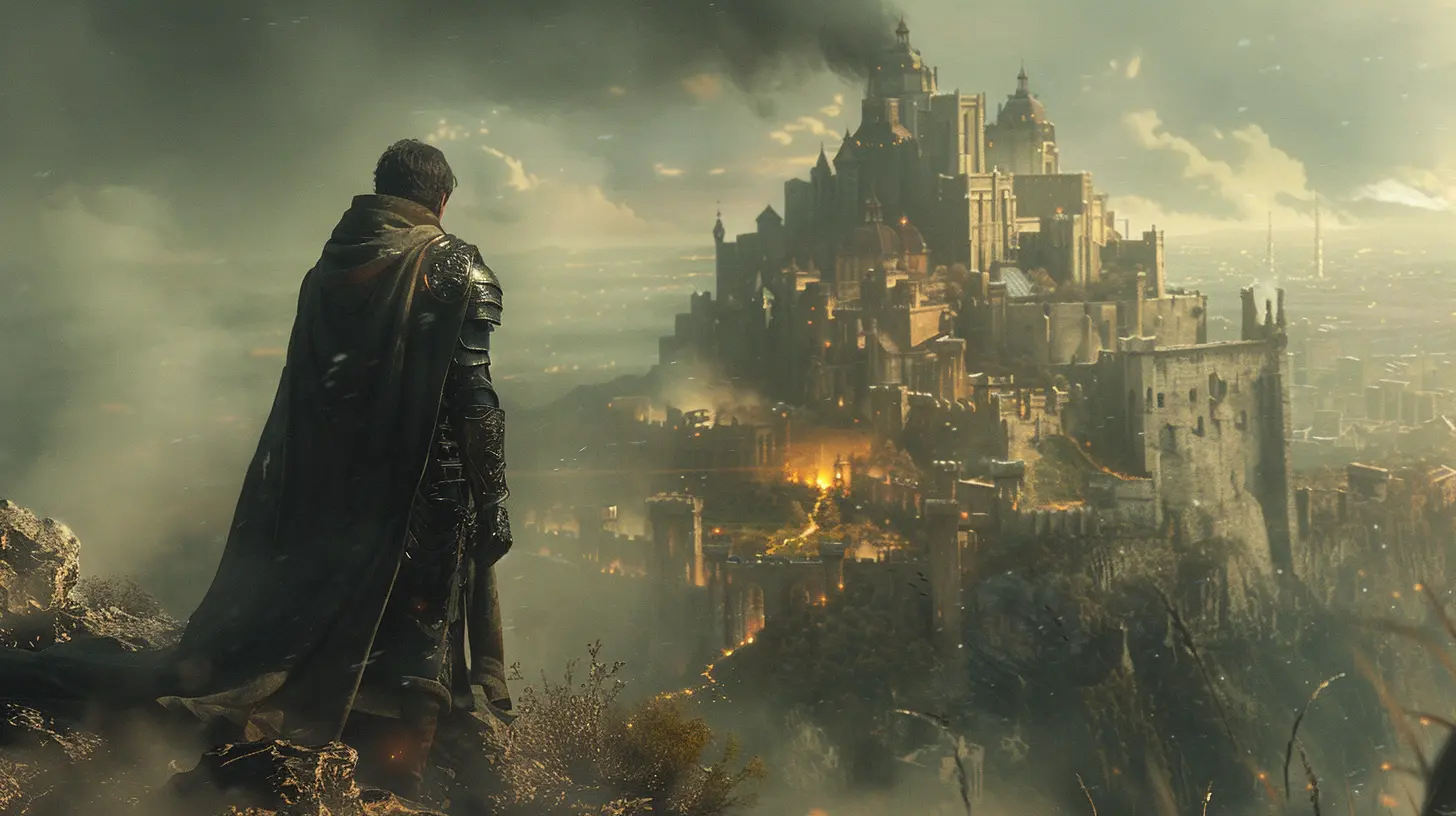
4. Strong Narrative Resolution
This one’s simple: the story has to make sense.Too often, we get endings that feel rushed, confusing, or completely out of left field. A great ending should resolve the core conflict in a way that aligns with the story’s logic.
It doesn’t mean all loose ends have to be tied up. But the main plot? That needs to land properly.
For example, Bioshock Infinite blew a lot of minds with its multiverse twist. It was complex, sure, but it made sense within the game’s world. The ending didn’t just wrap up Booker and Elizabeth’s journey — it redefined how we understood the entire narrative.
Great endings don’t just finish the story — they elevate it. They take what you thought you knew and flip it, deepen it, or give it new meaning.
5. Character Arcs That Come Full Circle
We connect with characters. Period.Their growth (or downfall) is one of the most powerful storytelling tools in gaming. That’s why a great game ending needs to complete their journey.
Look at God of War (2018). Kratos starts out as a gruff, emotionally guarded father. By the end? He’s opened up, learned to trust Atreus, and accepted his past. That character evolution makes the ending feel emotionally rich and totally earned.
A powerful character arc doesn’t just resolve the plot — it resonates on a personal level. Watching a character grow because of the choices you helped them make? That’s storytelling magic.
6. Atmosphere and Presentation
Let’s not forget the visuals, music, voice acting, and overall atmosphere. These elements can turn a good ending into a legendary one.The lighting, the soundtrack swelling at just the right moment, the final look in a character’s eyes — this stuff matters. A cinematic ending can imprint itself in your memory simply because it feels so right.
Games like Journey and Shadow of the Colossus don’t have much dialogue, but their final moments? Absolutely unforgettable. That’s the power of atmosphere.
Think of it like this: A story might touch your mind. But a well-crafted atmosphere strikes your soul.
7. Surprises That Don’t Break the Game’s Logic
A twist can be incredibly satisfying — if it makes sense.That “Aha!” moment, when everything clicks into place, can elevate an ending into masterpiece territory. But it has to feel organic. Forced twists? Nah, they just feel cheap.
Portal nailed its twist by revealing that GLaDOS wasn’t just a helpful voice — she was the villain all along. Shocking? Yep. But believable? Absolutely.
A memorable ending might surprise you — but it won’t betray the tone or logic of the game. It should feel like a revelation, not a betrayal.
8. The Right Length and Pacing
Ever finished a game where the ending just… dragged on? Or ended so quickly you had whiplash?Pacing is crucial. A great game ending builds momentum. It gives you time to process what’s happening, delivers the climax, then gently lets you go.
No one wants to feel cheated — like "Wait, that’s it?" But you also don’t want to sit through a 30-minute monologue while you twiddle your thumbs.
Games like Uncharted 4 strike this balance beautifully. They build to a thrilling yet emotional finale, then slow things down, giving you a quiet moment to say goodbye.
9. Legacy and Replay Value
Some endings make you want to go back and play it all over again — just to see what you missed. Others stay with you for years. That’s what we call legacy.A truly great ending has layers. It encourages discussion, fan theories, maybe even changes your perspective on the whole game.
Games like Undertale or Nier: Automata are masters of this. Multiple endings, each revealing something new, make your journey feel larger than life.
When the credits roll, and you still can’t stop thinking about what just happened — that’s when a game has truly nailed it.
10. Final Moments That Speak Louder Than Words
Sometimes, it’s not about the grand speech or flashy battle. It’s about a single line, a meaningful stare, or a silent goodbye.Great endings often have a “moment.” A piece that lives in your brain rent-free.
Maybe it’s Arthur Morgan watching the sun rise one last time (Red Dead Redemption 2). Or that quiet scene in Life is Strange when you make the final choice.
These are the moments that stay with us. They don’t need words — just emotion.
So, What’s the Formula?
If you’re wondering what the perfect ending looks like, here’s the hard truth: there isn’t one. Every player is different. Some crave closure, others love open-endedness. Some want happy endings, others appreciate the bittersweet.But there are common threads:
- Emotional resonance
- Logical storytelling
- Character-driven closure
- Thought-provoking moments
- Impactful presentation
When a game hits these notes, it doesn’t just end — it echoes. It sticks with you on a deep, emotional level. And that’s what makes a great game ending truly memorable.
Parting Thoughts
A great ending is like the final chord in a beautiful song — it lingers in the air, echoes in your head, and makes everything that came before it feel complete.Whether it brings you to tears, shocks you to your core, or just leaves you smiling in satisfaction, the best endings leave a mark.
So the next time you reach the end of a game, take a moment. Sit back and soak it in. Because if it’s done right, that ending could stay with you forever.
all images in this post were generated using AI tools
Category:
Game Reviews ArchiveAuthor:

Madeleine McCaffrey
Discussion
rate this article
2 comments
Vito McGillivray
A memorable game ending resonates emotionally, ties up loose ends, and leaves players reflecting on their journey, ensuring the experience lingers long after the credits roll.
June 26, 2026 at 3:42 AM
Madeleine McCaffrey
I completely agree. A powerful ending not only wraps up the story but also deepens the emotional connection, making the journey unforgettable.
Nora Wolfe
A great game ending ties everything together, leaving us with that "wow" feeling. It's like finishing a good book and wanting to talk about it for hours. Here's to unforgettable finales and the joy they bring!
May 22, 2026 at 4:24 AM
Madeleine McCaffrey
Absolutely, a great ending creates that lasting impact. It lingers in our minds and sparks conversations long after the credits roll. Here's to the power of unforgettable moments!