Video Games Reveal a Hidden Flaw in LG OLED Televisions
April 28, 2026 - 07:25

For years, OLED technology has been celebrated for its perfect blacks, vibrant colors, and lightning-fast response times, making it a favorite among gamers and home theater enthusiasts. LG, in particular, has dominated the OLED market with its premium television lineup. However, while consumers are often warned about the risks of burn-in and dead pixels, a new and lesser-known vulnerability is now being exposed by modern video games.
The issue centers on how certain games handle static user interface elements, such as health bars, mini-maps, and scoreboards, combined with the unique pixel structure of LG’s OLED panels. Unlike traditional LCDs, OLED pixels are self-emissive, meaning each pixel generates its own light. When a game displays a bright, static icon for extended periods, the surrounding pixels must work harder to maintain brightness consistency. This can lead to a phenomenon called "temporal dithering" or "pixel wear non-uniformity," where the screen develops subtle but permanent patches of uneven brightness—distinct from classic burn-in.
Several popular titles, particularly those with high-contrast HUDs or frequent loading screens, have been reported to trigger this effect. For example, games with bright white text on a black background, or those that use fixed-position inventory bars, can cause the affected pixels to degrade faster than the rest of the screen. The result is a faint ghosting or discoloration that becomes visible during darker scenes, even after the game is turned off.
Compounding the problem, LG’s automatic brightness limiter (ABL) and pixel-refresh cycles, designed to protect the panel, sometimes struggle to compensate for these specific usage patterns. Gamers who play the same title for hundreds of hours are now noticing these artifacts long before the expected lifespan of their TV. While LG has acknowledged the issue in community forums, no official firmware update has fully resolved it. For now, owners are advised to reduce HUD opacity, enable screen-shifting features, and vary their game library to minimize the risk. This discovery serves as a reminder that even the most advanced display technology has its hidden compromises.
MORE NEWS
October 26, 2026 - 07:17
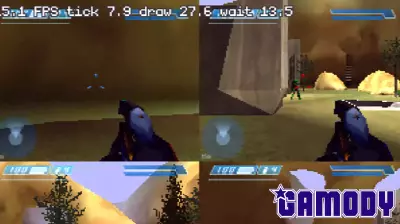
Halo 64 Port Turns Blood Gulch Into A Nintendo 64 Split Screen MatchTwenty five years after Halo Combat Evolved redefined console shooters on the original Xbox, a fan project has moved its multiplayer suite onto the Nintendo 64. Halo 64, created by Jack Tulli and...

October 25, 2026 - 21:17
Nintendo's Miyamoto Becomes First Game Developer to Receive Japan's Order of CultureShigeru Miyamoto, the creator behind some of the world`s most recognizable video game characters, has been awarded Japan`s Order of Culture, making him the first person from the video game industry...

October 25, 2026 - 21:07
Elden Ring Film Adaptation Reportedly Carries $200 Million BudgetThe upcoming film adaptation of Elden Ring is reportedly working with a budget of $200 million, according to new industry reports. The project, which pairs studio A24 with director Alex Garland,...

October 25, 2026 - 20:59
Five Nintendo DS Classics You Can't Really Play AnymoreThe Nintendo DS built one of the most unusual libraries in gaming history, full of dual screen experiments and touch controls that defined a generation. Plenty of those titles have found new life...