Uncovering the Origins of the Open-World Genre
8 January 2026
If you’ve ever lost an entire weekend riding horseback through the lands of Hyrule, or cruising at top speed down the digital highways of Los Santos, then you know the intoxicating freedom that comes with an open-world game. But have you ever wondered how this genre came to be? Who paved the way for this sandbox-style gameplay? Why is it one of the most beloved game formats today?
Let’s take a deep dive (or maybe a freefall, GTA-style?) into the fascinating history and evolution of the open-world genre. Grab your digital backpack—we're about to uncover the roots of one of gaming's most immersive storytelling techniques.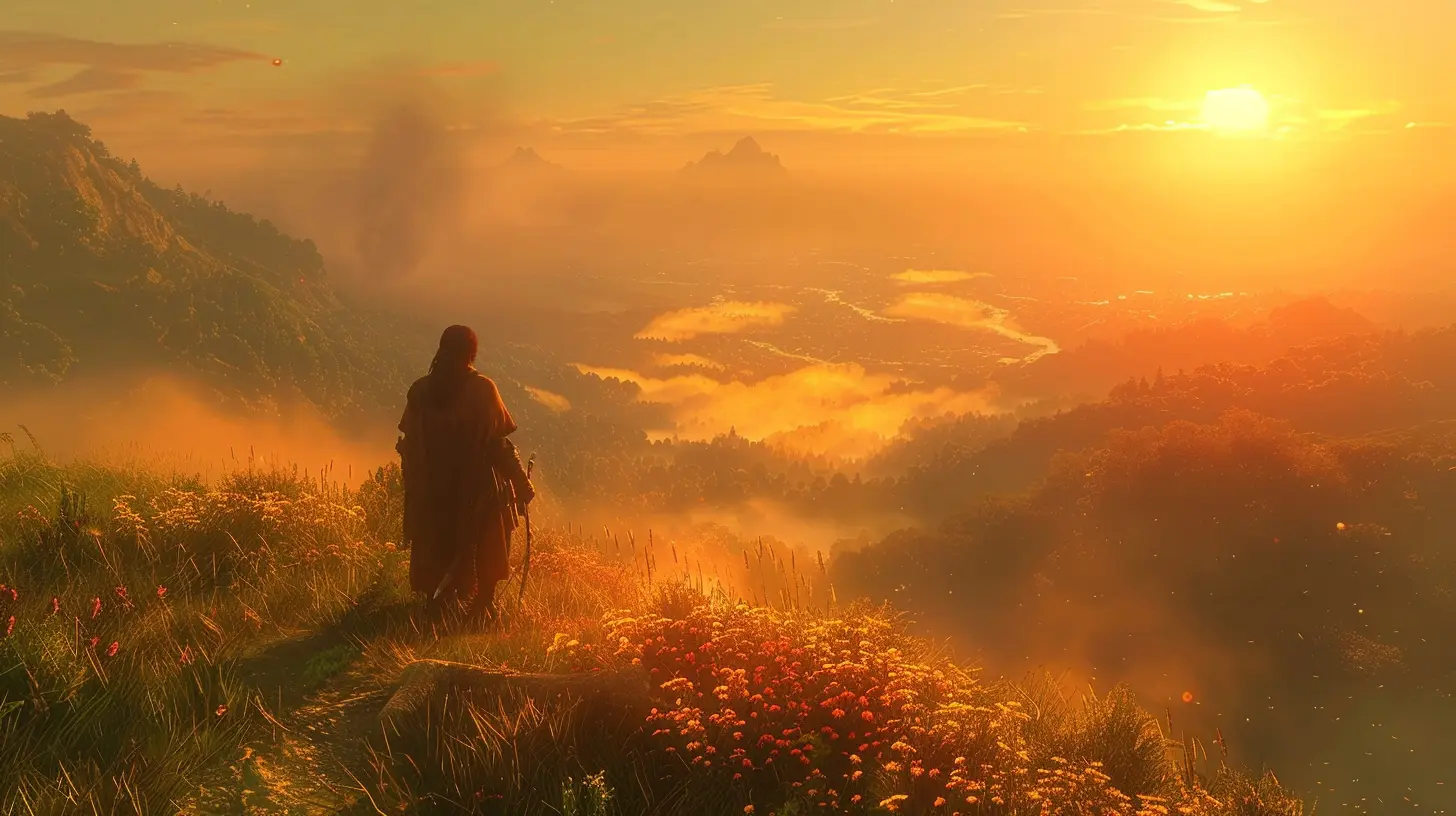
What Even Is an Open-World Game?
Before we dive into the past, let’s clear the air. What qualifies as an open-world game?At its core, an open-world game gives players the freedom to explore a large game world at their own pace. There are missions, objectives, and story arcs, sure. But the real draw? You can go anywhere and do (almost) anything. You're not led by the hand; you're given the keys to a kingdom—or a planet—and told, “Have at it.”
It's like the difference between a rollercoaster and a choose-your-own-adventure book. The destination might be the same, but how you get there? That's entirely up to you.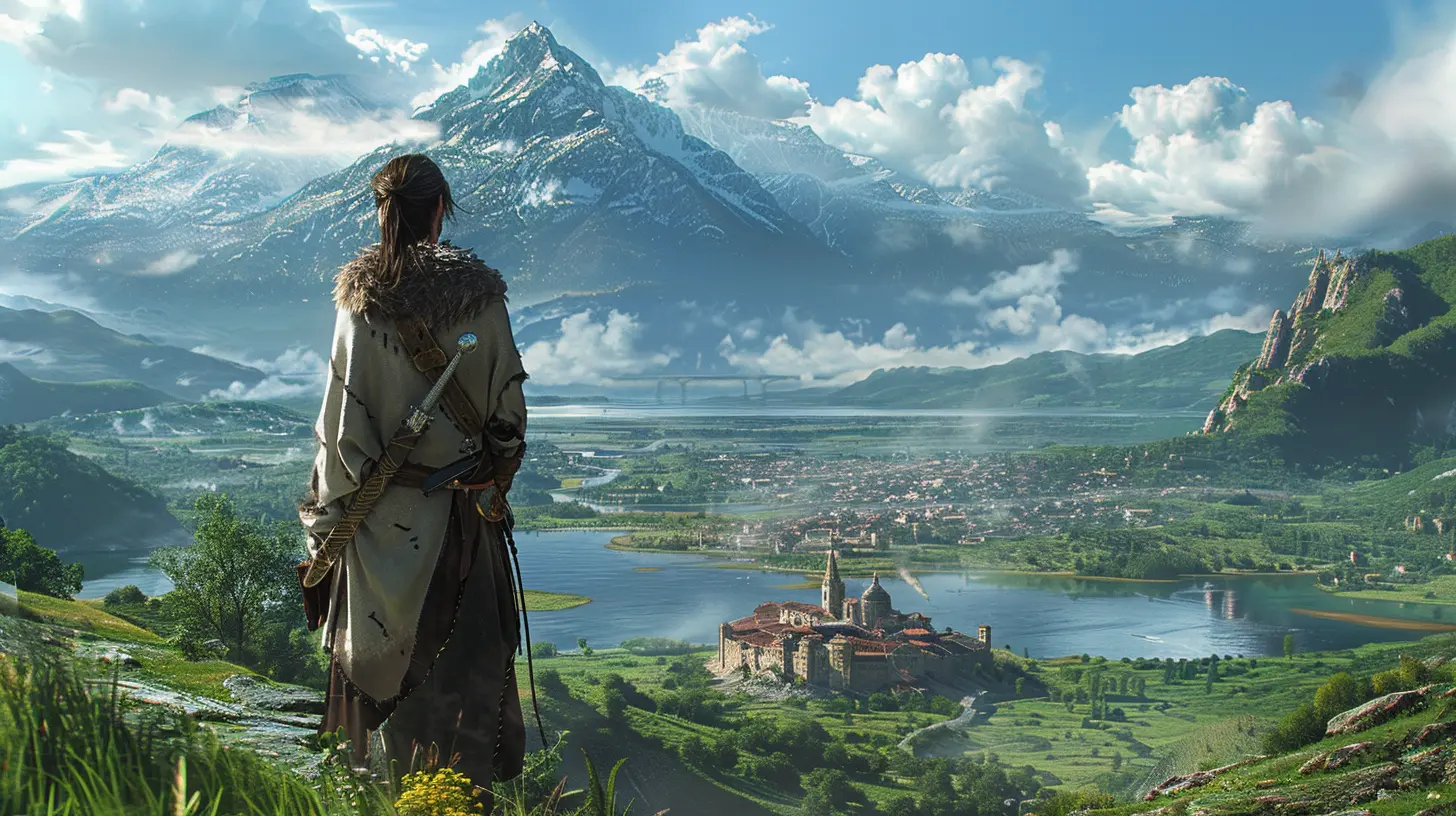
The Seed Was Planted Early: Text-Based Adventures
Let’s wind back the clock—way back to the 1970s. Before 4K graphics and ray tracing, gamers were typing commands into a blinking cursor.🌲 The Birth of Imagination: Colossal Cave Adventure (1976)
Believe it or not, the great-grandparent of open-world games had no graphics at all. “Colossal Cave Adventure” was a text-based game that let players explore a vast fictional cave system. You had to type commands like “go north” or “take lantern.”It sounds primitive today, but it was revolutionary. It let players choose how to interact with the game world—something that would be baked into the DNA of open-world design for decades to come.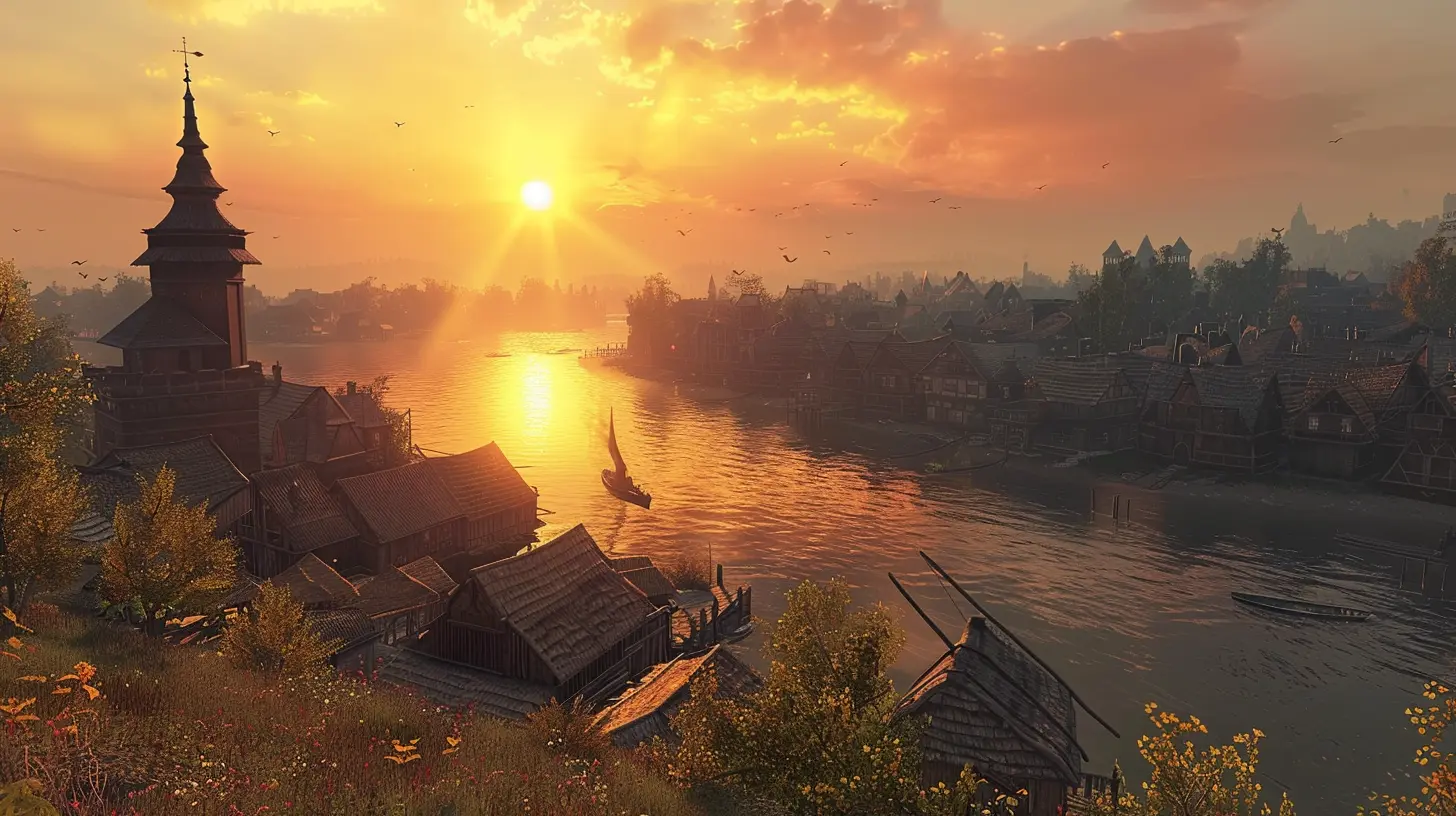
The 80s and 90s: The Genre Begins Taking Shape
The open-world concept started to get meat on its bones in the ‘80s and ‘90s as hardware improved and developers got bolder.🕶️ Elite (1984): Space, the Final Frontier
“Elite” was one of the first games to offer a true open-ended experience in a 3D space. You were a spaceship captain with a simple goal: survive and thrive. You could trade, explore, or become a space pirate. There were no rails, no clear-cut path—just endless freedom among the stars.Sound familiar? That’s because modern games like “No Man's Sky” and “Starfield” owe a massive debt to this pixelated pioneer.
🐉 The Legend of Zelda (1986): A Top-Down Revolution
When Nintendo dropped “The Legend of Zelda,” it gave players an open world on a silver cartridge. You could wander the Kingdom of Hyrule however you liked. There were dungeons to find, secrets to uncover, and puzzles to solve—but no one told you where to start.This was one of the first console games where "exploration" wasn’t just a feature—it was the game.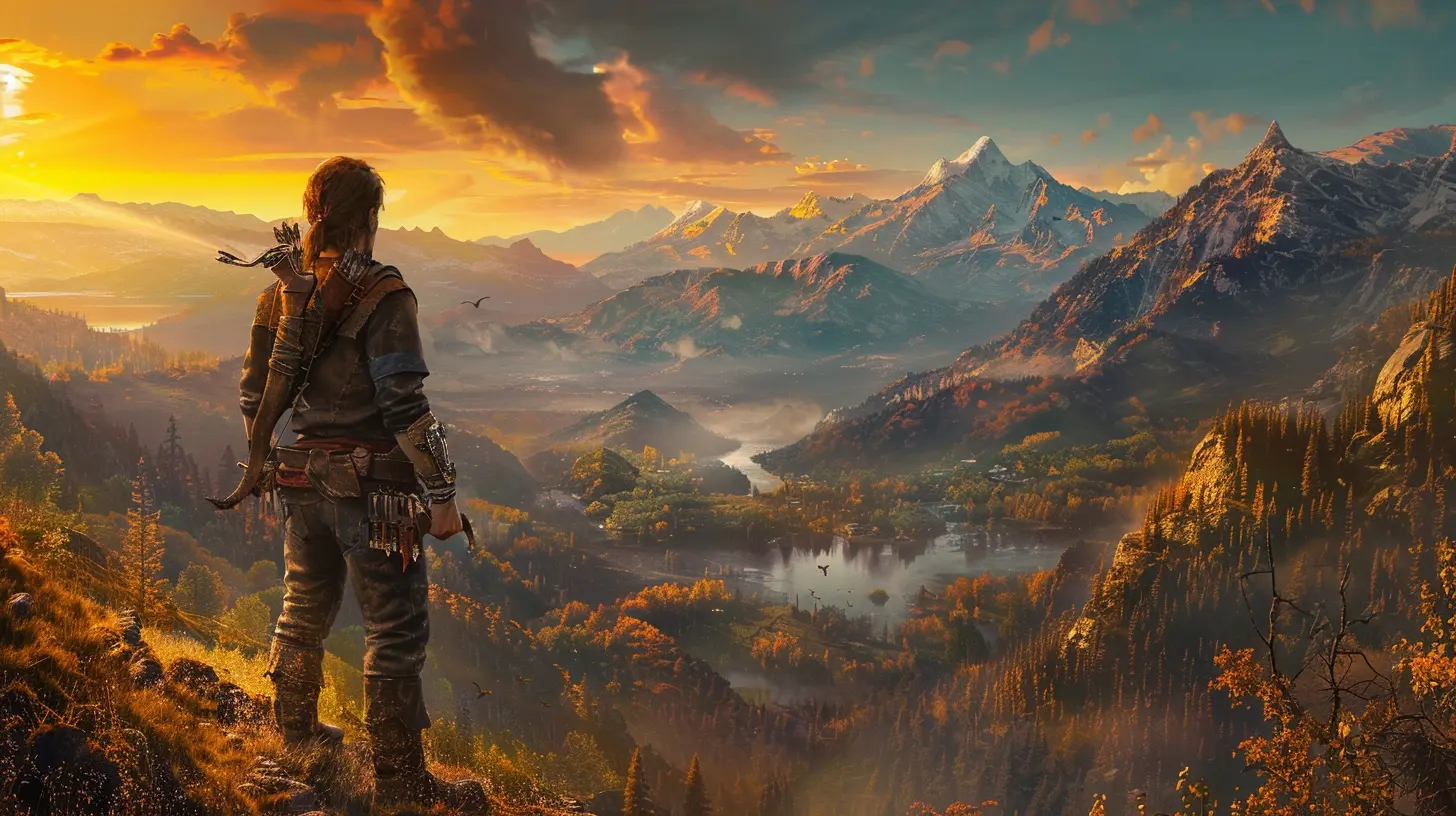
The Grand Awakening: GTA and the Birth of True Sandboxes
Fast forward to 2001. Enter “Grand Theft Auto III.”🚗 GTA III (2001): Welcome to Liberty City
This was a turning point. “GTA III” took the open-world concept and threw it into a living, breathing 3D city. Suddenly, missions were optional. Stealing a cab and pretending to be a driver? Absolutely allowed. Causing chaos just because you could? Encouraged.Story didn’t take a backseat—it was just hanging out in the passenger seat, letting you take the wheel when you felt like it.
This type of freedom was unprecedented at the time. And it became the gold standard for what we now think of as open-world games.
The Influencers: How Other Games Shaped the Genre
No genre evolves in a vacuum. Various games influenced what open-world design would become. Let’s name-drop a few game-changers.⚔️ Morrowind (2002): Fantasy and Freedom
Bethesda’s “The Elder Scrolls III: Morrowind” gave players an enormous fantasy world and said, “Go nuts.” Want to be a sneaky thief? A noble knight? A mage who floats over rooftops? You could be whoever you wanted—in a detailed world with its own laws, economy, and culture.Bethesda basically said: “Let’s make a Dungeons & Dragons campaign—but digital, and with dragons you don’t have to imagine.”
✅ Far Cry (2004) and Far Cry 2 (2008)
While the first “Far Cry” wasn’t fully open-world, “Far Cry 2” introduced expansive maps, dynamic elements like weapon degradation, and AI behavior that added life to the game.The series took notes from GTA but added a new flavor—one that would inspire a long line of action shooters with open-world frameworks.
A New Era: The 2010s and the Explosion of Open Worlds
The 2010s were when open-world games really went mainstream. New consoles meant bigger worlds, better graphics, and deeper gameplay mechanics. The genre exploded.🐴 Red Dead Redemption (2010) & RDR2 (2018)
Rockstar did it again with Wild West flair. “Red Dead Redemption” turned the dusty American frontier into a hauntingly beautiful stage for storytelling, exploration, and moral choices.Its sequel, RDR2, arguably pushed the concept as far as it could go—it wasn’t just a game; it felt like living in a digital reality.
🛡️ The Witcher 3: Wild Hunt (2015)
CD Projekt Red crafted a dark, sprawling universe filled with morally complex characters, haunting quests, and deeply satisfying exploration. It’s often cited as one of the greatest open-world games ever made—and for good reason. The world felt alive. Every corner hid a story.🗡️ Breath of the Wild (2017): Zelda Comes Full Circle
Nintendo brought Zelda back to its roots—but this time, in HD. Freedom returned as a core value. Want to climb a mountain? Sure. Roll down the other side in a metal barrel? Why not?“Breath of the Wild” was minimal guidance, maximum curiosity. It told players: “You see that mountain? You can climb it.” And that simple promise reignited the magic of exploration.
The Indie Impact: Small Studios, Big Worlds
You don’t need a billion-dollar budget to make open-world magic. Indie developers have also gotten in on the goodness.🌌 Outer Wilds (2019): A Time Loop Sandbox
This cult-hit gave players a solar system to explore—within a 22-minute time loop. You had to unravel its mysteries by exploring and experimenting, not shooting and looting.It’s more “aha!” than “boom!”—but that’s the beauty of it.
🐇 Tunic (2022): Old School Meets New Age
“Tunic” sneaks in a semi-open world format with lots of nods to classic Zelda. It’s a gorgeous, cryptic adventure that rewards curiosity and patience.What Makes Open-World Games So Addicting?
Let’s be real—why do we love these games so much?Is it because they let us escape? Let us be someone else? Maybe. But more than that, they tickle our most basic human instinct: curiosity.
It's the same reason kids explore playgrounds. Open-world games say, "Wanna see what's behind that mountain?" And we say, "Heck yes."
Plus, there's that rush of ownership. Your story in Skyrim or GTA V won't be the same as mine. We each carve out our own paths. Our own legends.
The Future of Open-World Games: Where Are We Headed?
With tech like AI-generated content, machine learning, and cloud gaming, the future of open-world design is looking wild.Imagine worlds that literally evolve with you—where NPCs remember your actions, cities rebuild after destruction, and weather systems impact the economy.
Games like “Starfield” and “GTA VI” are already teasing next-level immersion. Procedural generation and real-time decision trees? That’s just the beginning.
We might be heading toward truly living worlds—games that feel more like simulations than stories on rails.
Final Thoughts: A Genre Born to Roam
The open-world genre didn't appear overnight. It was nurtured through decades of creative ambition, technological breakthroughs, and gamer feedback. It started in text and evolved into vast, 3D worlds brimming with life. From caves to cosmos, from Hyrule to outer space, open-world games continue to push boundaries.Whether you're a seasoned adventurer or just someone who likes to take the scenic route, the world—virtual or otherwise—is your playground.
So next time you ride off into a digital sunset, remember—you’re part of a history that spans nearly five decades. And guess what?
The best is probably yet to come.
all images in this post were generated using AI tools
Category:
Gaming HistoryAuthor:

Madeleine McCaffrey
Discussion
rate this article
3 comments
Falkor Alvarez
What fascinating influences shaped the open-world genre’s evolution? I’d love to learn more!
April 13, 2026 at 2:40 AM
Madeleine McCaffrey
Thanks for your interest! Key influences include early RPGs, classic adventure games, and the desire for player freedom. I'd recommend exploring titles like "Zelda" and "Myst" for a deeper understanding.
Jax McConnell
Exploring origins deepens our appreciation for innovation.
January 19, 2026 at 4:39 PM
Madeleine McCaffrey
Thank you! Understanding the origins truly enriches our perspective on the evolution of the open world genre.
Camille Lane
Fascinating insights! The evolution of open-world gaming is intriguing.
January 12, 2026 at 5:56 AM
Madeleine McCaffrey
Thank you! I'm glad you found it interesting—there's so much depth to explore in open-world gaming's history!